Tuesday, March 5, 2019

5 Reasons Your Cat is Peeing (or Pooping!) Outside the Litter Box...

A note from SJ Francis: As a pet parent, including a cat parent, I can attest that there is nothing more disgusting than having your cat pee or poop outside the litter box. In July 2016, I adopted a senior cat from a rescue. She is smart, beautiful and loving. She pees inside the litter box and for the most part, is a clean cat. Unfortunately,while in the rescue for four long years with 165 other cats inside a cattery, she developed the bad habit of pooping outside the litter box. I've read article after article about this, just like the one below to try and get her to stop. None have helped because we are already doing everything suggested. We believe she suffered a trauma while at the cattery, or she just hated sharing boxes with other cats, which causes her litter box aversion. Either way, we knew we couldn't abandon her by bringing her back to the shelter. Who would adopt her now? We couldn't dump her either. Fortunately, she is getting better and doesn't avoid the litter box as often as she did in the beginning. We have learned to live with her "dirty" habit by placing training pads outside the litter box. Instead of pooping on the  floor just outside the box, she sometimes poops on the pads instead. It also appears that when she has the runs is when she avoids the litter box. We also keep disinfectant wipes on hand. When you love animals, you learn to adjust to live with them. I hope that if you have a cat, you'll work with her/him to find out why they are avoiding the litter box. Whatever you do please don't give up on him or her. We haven't.

Originally from Pet Coach.com:

BEHAVIOR & TRAINING

5 Reasons Your Cat is Peeing (or Pooping!) Outside the Litter Box

Jennifer Summerfield, DVM CPDT-KA
Written by
Veterinarian, Certified Animal Behavioralist
5 Reasons Your Cat is Peeing (or Pooping!) Outside the Litter Box
If you’re a cat owner, you know that there’s nothing quite as frustrating as finding out that your cat has been peeing or pooping outside the litter box. This is one of the most common behavioral issues that we see in pet cats, and one that can cause a tremendous amount of stress for cat owners – and in some cases, even leads to rehoming of the cat.
Fortunately, this is often a very treatable problem that can be successfully resolved once we determine what is causing it. Read on for some common possible causes of accidents outside the litter box.

Medical Problems

Medical Problems
There are a number of different illnesses and medical problems that can cause cats to have accidents outside the litter box. Some common possibilities would include FIC (feline idiopathic cystitis), bladder stones, urinary tract infections, chronic kidney disease, diabetes, or hyperthyroidism.
It’s actually much more common for litter box accidents to stem from a medical problem rather than a behavioral one, so it’s important to have your cat examined by a veterinarian before assuming that it’s a training or behavior issue. If there is an underlying medical issue causing the accidents, this will need to be diagnosed and treated properly in order to resolve the problem.

Litter Box Aversion

Litter Box Aversion
Some cats have accidents in in appropriate places because they don’t like something about their litter box – it can take some detective work in some cases to figure out what the problem is! Some common litter box problems that can cause cats to look elsewhere for a good spot to use the bathroom are a box that’s too small, a strongly scented litter, a cover on the box, an inconvenient location, or a lack of cleanliness.
Most cats prefer a large, low-sided litter box that is kept very clean – meaning scooped once or twice daily, and litter changed out completely every 1-2 weeks. Covered litter boxes can be off-putting to some cats, since they trap odors inside and may also make the cat anxious by blocking the view of its surroundings. Finally, litter boxes should be in a quiet, safe location away from high traffic areas or noisy appliances that could scare your cat. Often, if the litter box is the problem, a few simple changes may be all that is needed to encourage your cat to use it again.

Stress or Anxiety

Stress or Anxiety
Very often, accidents outside the litter box can be a sign of stress or anxiety in cats. One common cause of stress for cats would be a sudden change in their daily routine or environment – such as moving, their owner leaving town for a trip, a houseguest staying with them for a few days, a member of the household moving out, or a new baby in the house. Problems with other pets in the home, such as a dog who pesters the cat, or two cats who don’t get along, can also cause stress… which in turn leads to accidents.
If you suspect that your cat may be having accidents due to stress or anxiety, it’s best to talk with your veterinarian since many cats with significant anxiety issues can be greatly helped by prescription medication. Other options that may be helpful would include Feliway pheromone diffusers, or natural calming supplements such as Zylkene or Composure.

Urine Marking

Urine Marking
Urine marking (also called spraying) is a very normal behavior for unneutered male cats – this is one of the main reasons that almost all indoor male cats are neutered! The urine of intact males is also extremely smelly, which makes it difficult to clean up and very hard to live with. It can be almost impossible to curb this behavior in an intact male, so it’s strongly recommended to have your male cat neutered if he lives in the house and you haven’t done this already.
Some intact females also spray, although it’s less common than in males. If your female cat is marking in the house, spaying may help to resolve this behavior.

Cognitive Dysfunction

Cognitive Dysfunction
Some older cats can develop cognitive problems similar to dementia or Alzheimer’s disease in humans – this can lead to having accidents outside the litter box in some cases, since they may forget where it’s located or not realize they need to go until it’s too late.
Other symptoms of cognitive dysfunction may include excessive vocalization during the night, getting “lost” in familiar places, or staring off into space. If you suspect that your cat may have some problems with cognitive dysfunction, it’s best to discuss this with your veterinarian – there are medications available that can help.

FYI: To find an animal in need of a home; to find an animal shelter near you, check out  https://www.petfinder.com


Remember, all types, ages, breeds, even purebreds are waiting to be adopted. 


Thanks for visiting my blog for the animals. It's always great to connect with another animal lover. If you and I don't speak up for them, who will? 

POTW feature

Coins That Count: 
Is your coin jar overflowing? Turn that loose change into cash that helps animals by donating to The HSUS at participating Coinstar machines nationwide. Where to go» Find a Kiosk near you...


Until next time….hug your animals. Tell them you love them. If you don’t have a pet, adopt one. Make adoption your first option when seeking a pet. Adopt. Don’t shop. Can’t adopt. Please consider fostering one. The animal will have the taste of home and the shelter will cover the expenses. Can’t foster? Make a donation or volunteer at your local shelter. Please, don’t hunt. Unless you’re starving down in a ditch somewhere, there is no logical reason to do so. Whatever you do, however you do it, please be a voice for the animals large and small. All it takes is one to make a difference, good or bad.
                                     
Together, you and I can make a difference in an animal's life.  I’m one for the animals. Are you? Thanks for visiting. Stay safe. Be strong. Be happy. Smile. Show compassion. Be nice to one another. Pass it onward. If you like what you see here, please consider signing up to become a follower. Please feel free to share this post with others.
    Regards,
    S.J. Francis
    In Shattered Lies: "Good and bad, it's All About Family."  
Available now from Black Opal Books and for sale at on-line retailers and independent booksellers.
   “Some secrets should remain that way.” 
      My Black Opal Books Author Page:
                 My web page: http://www.sjfranciswriter.com
                                     Twitter: https://twitter.com/sjfrancis419
Image result for black animals need help
 Facebook fan page:  https://www.facebook.com/pages/SJ-Francis/480058115420325
                  My writing Blog: http://sjfranciswriter.blogspot.com
                                                     
          A Book Review 4 U: http://abookreview4u.blogspot.com
                  A Consumer's View: http://aconsumersview.blogspot.com


And now for some legal stuff: Copyright 2019 by S.J. Francis. Opinions expressed here are solely those of the author, S. J. Francis and are meant to entertain, inform and enlighten, and intend to offend no one.
Make spare change make a difference for the wild. Join @CaringCent & purchases will be rounded & change 
donated: https://donate.caringcent.com/#/go/wildearthguardians
                                         
Remember: Animals don't have voices. We must be their voice. Always. Forever. Wherever. whenever. I'm one for the animals. Are you?  

Tuesday, February 5, 2019

How Long Is Too Long to Leave Your Dog Alone?


Originally from Healthy Pets/Mercola with Dr. Karen Becker....

How Long Is Too Long to Leave Your Dog Alone?


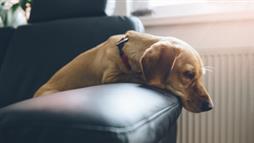
lonely dog
  • A question every loving dog parent should ask is, “How long is too long to leave my dog alone?”
  • Dogs left alone for several hours each day can suffer from isolation distress
  • Two rules of thumb: 10 to 12 hours is too long to leave a dog alone, and dogs need to have an opportunity to relieve themselves every four to six hours
  • Crate training your dog is recommended, but leaving him confined to his crate all day is something he absolutely doesn’t deserve
  • There are many options that will limit your dog’s time at home alone, including doggy daycare, a dog walker or sitter, and/or working from home or taking your dog to work with you

By Dr. Karen Shaw Becker
I recently read a thought-provoking article in one of my favorite pet-related publications, Whole Dog Journal, titled "How Long is Too Long to Leave a Dog Alone?"
The author, a certified professional dog trainer, asks a very important question that I also think about a lot: "How much isolation a dog can and should endure are two different things. How much time does your dog spend home alone? Is your dog experiencing isolation distress?"1

Yes, I Do Realize Many Dog Guardians Work All Day Outside the Home

First let me say that I realize this is a hot button issue for many dog parents, and for good reason. Many people who adopt a dog from a shelter or rescue work outside the home, go to school or engage in other activities that take them away from their houses for several hours, several days a week.
By necessity, they must leave their dogs behind, but since they've given an abandoned or unwanted dog a loving home, they feel it's unfair to criticize them for leaving their pet alone for long stretches.
I understand where these pet parents are coming from, and I agree that it's certainly better for a dog to be in a forever home than a shelter. I don't pretend to have all the answers to the problem of dogs left alone all day, but as a wellness veterinarian and animal advocate, I can't in good conscience just ignore the issue for fear of making someone angry or hurting their feelings.
My goal here is simply to help dog guardians see the home-alone situation through their pet's eyes, and hopefully offer some suggestions you may not have thought of as alternatives to leaving your canine family member at home alone all day. As dog trainer Nancy Tucker writes in her article:
"A lot of dogs might spend most of their waking hours home alone and seem to do just fine, but is it okay? Are they really fine? I sometimes wonder if, instead, this is something we say to ourselves to assuage our guilt, or to avoid taking a harder look at a cultural norm that could use an update."

Isolation Distress Versus Separation Anxiety

It's important to note that a dog's distress while she's home alone isn't necessarily a case of full-blown separation anxiety. Distress is a milder form of stress and anxiety, whereas dogs with separation anxiety can have the canine version of a panic attack when their preferred human isn't around. According to Pat Miller, another animal behavior expert who writes for Whole Dog Journal:
"The distinction between 'isolation' and 'separation' is equally important. Isolation distress means the dog doesn't want to be left alone — any ol' human will do for company, and sometimes even another dog will fill the bill. True separation distress or anxiety means the dog is hyper-bonded to one specific person, and continues to show stress behaviors if that person is absent, even if other humans or dogs are present."2

Truth: '10 to 12 Hours Is Too Long for a Dog To Be Alone in a Single Stretch'

Not so long ago, no one gave a second thought to leaving a dog home alone for a day or two with a supply of kibble and plenty of water to drink. It just didn't occur to pet owners to wonder how their dog felt being left alone, whether indoors or outside. Fortunately, these days most people know better than to leave their dog alone for such a long stretch, but it's very common for dogs to be left home for eight or 10 or 12 hours, up to five or six days a week.
And depending on the owner's lifestyle, he or she may arrive home after 10 hours, give the dog a quick walk and dinner, and then go back out for the evening. (Of course, on the flip side, there are also dog parents who turn down social invitations to spend evenings and weekends with their pet.)
"Here's the thing," writes Tucker, "and I won't pull any punches: 10 to 12 hours is too long for a dog to be alone in a single stretch." I agree. Of course, as she goes on to say, there are plenty of people who argue they've always left their dogs, with no issues.
"What this means," says Tucker, "is that the dogs who appear to be fine have simply learned to cope with something that is entirely out of their control. Being left alone for long stretches of time is not a likely choice that they would make if it was up to them. They've adapted to our routines, but it's far from ideal for them."
Again, I have to agree. Tucker also writes:
"We count on our dogs to be there for us when we're ready to interact with them, but in between those moments, we expect them to do nothing and wait. It's a tall order, but lucky for us, most dogs adapt incredibly well to anything we ask them to."
Food for thought: How can we give our dogs more choices in their daily lives?

Truth: Dogs Need To Be Able to Relieve Themselves Every 4 to 6 Hours

There's no hard-and-fast rule for the maximum amount of time a dog can be left alone in a single stretch. Each dog is an individual, and some manage or cope better than others when left alone.
Obviously, potty breaks are a necessity. Most healthy adult dogs need three to five opportunities each day to pee and/or poop. Older dogs and those with certain conditions such as urinary incontinence need to go out more often. Generally speaking, dogs shouldn't go without a potty break for more than four or six hours. (Please note I'm only discussing adult dogs here, since it goes without saying that puppies — for a multitude of reasons — shouldn't be left alone.)
It's important to realize that while your dog can "hold it" for longer periods, he really shouldn't have to. Imagine how you would feel if you were dependent on someone else to give you permission to go to the bathroom, and often that person made you wait long past the point at which you became uncomfortable "holding it." Beyond four hours without a potty break, and certainly beyond six, most home-alone dogs become uncomfortable.
Beyond the potty break issue, the fact is that dogs are social creatures who need opportunities to interact with people several times a day, and many also benefit from interaction with other dogs as well.

Truth: 'A Crate Is No Place for a Dog to Spend an Entire Day'

Some dog parents resort to confining their pet to a crate while they're gone all day. This is often in response to damage the dog has done around the home when left alone to entertain himself. However, behavior issues created by isolation distress or plain old boredomare only made worse by crate confinement, and in addition, it increases the dog's stress level.
"A crate is no place for a dog to spend an entire day," writes Tucker. "If necessary, confinement in a small space should be temporary and for short periods of time, say, a couple of hours, tops."
Even if your dog is crate trained and loves go in there to nap or avoid the vacuum, and even if she's confined to her crate at night in your bedroom as you sleep, it's a whole different ballgame locking her in there for the entire day while you're away. Tucker makes this very apt comparison:
"… I have a favorite chair in the living room where I sometimes like to curl up and take a nap. My choosing to spend time relaxed in a space without budging for sometimes an entire hour is a far cry from being physically confined to that chair, unable to leave it to stretch, eat, drink, relieve myself, or just plain do something else. It's time we rethink the use of crates and our dependence on them."
For the record, I'm a big advocate of crate training, however, like Tucker, I certainly don't believe in using one to confine a dog for long periods. But providing your dog with her very own cozy space and making it a pleasant place to be has a number of advantages for both of you. A crate can help not only with housetraining, but also car or plane travel, and overnight stays with friends, family or at apet-friendly hotel.

Options to Consider if Your Dog Is Home Alone During the Day

I recognize that none of the following suggestions necessarily qualifies as a piece of cake to do. Finding alternatives to leaving your dog home alone will depend on your budget, your freedom to manage your time during the day, your family and social support system, and other factors.
  • See if your employer will let you work from home some or all of the time. Depending on the kind of work you do, you may be able to do it effectively from home. If so, ask your boss if he or she would be amenable. You'll never know if you don't ask!
  • See if you can bring your dog to work with you. Again, this depends on the kind of work you do, who you work for, and whether your employer might be open to having dogs in the workplace. (Obviously, if you work for yourself, you can give yourself permission!)
  • Come home for lunch. If your workplace is close enough, consider returning home at lunchtime to walk your dog and spend some time interacting with him.
  • Ask a stay-at-home family member or friend to dog-sit. Is there anyone in your family or circle of friends who likes dogs (including yours), is home a lot and would be willing to care for your dog a few days a week? Perhaps you can offer the person something they need in return, such as pet- or babysitting services.
  • Arrange for someone to stop by and walk your dog. This could be a friendly neighbor or anyone you know and trust who likes dogs and would be willing to give yours some attention a few days a week. You can also offer to pay a neighborhood child or teen to do it.
  • Hire a professional dog walker. There are a lot of dog walking services around these days, depending on where you live. If you decide to go this route, be sure to do your homework and find a reputable one.
  • Enroll your pet in doggy daycare. If your dog enjoys interacting and playing with other dogs, a doggy daycare once or twice a week can be a godsend. "Look for clean, well-designed locations with qualified staff who will manage interactions between the dogs and provide necessary rest periods," advises Tucker.

FYI: To find an animal in need of a home; to find an animal shelter near you, check out  https://www.petfinder.com


Remember, all types, ages, breeds, even purebreds are waiting to be adopted. 


Thanks for visiting my blog for the animals. It's always great to connect with another animal lover. If you and I don't speak up for them, who will? 

POTW feature

Coins That Count: 
Is your coin jar overflowing? Turn that loose change into cash that helps animals by donating to The HSUS at participating Coinstar machines nationwide. Where to go» Find a Kiosk near you...


Until next time….hug your animals. Tell them you love them. If you don’t have a pet, adopt one. Make adoption your first option when seeking a pet. Adopt. Don’t shop. Can’t adopt. Please consider fostering one. The animal will have the taste of home and the shelter will cover the expenses. Can’t foster? Make a donation or volunteer at your local shelter. Please, don’t hunt. Unless you’re starving down in a ditch somewhere, there is no logical reason to do so. Whatever you do, however you do it, please be a voice for the animals large and small. All it takes is one to make a difference, good or bad.
                                     
Together, you and I can make a difference in an animal's life.  I’m one for the animals. Are you? Thanks for visiting. Stay safe. Be strong. Be happy. Smile. Show compassion. Be nice to one another. Pass it onward. If you like what you see here, please consider signing up to become a follower. Please feel free to share this post with others.
    Regards,
    S.J. Francis
    In Shattered Lies: "Good and bad, it's All About Family."  
Available now from Black Opal Books and for sale at on-line retailers and independent booksellers.
   “Some secrets should remain that way.” 
      My Black Opal Books Author Page:
                 My web page: http://www.sjfranciswriter.com
                                     Twitter: https://twitter.com/sjfrancis419
Image result for black animals need help
 Facebook fan page:  https://www.facebook.com/pages/SJ-Francis/480058115420325
                  My writing Blog: http://sjfranciswriter.blogspot.com
                                                     
          A Book Review 4 U: http://abookreview4u.blogspot.com
                  A Consumer's View: http://aconsumersview.blogspot.com


And now for some legal stuff: Copyright 2019 by S.J. Francis. Opinions expressed here are solely those of the author, S. J. Francis and are meant to entertain, inform and enlighten, and intend to offend no one.
Make spare change make a difference for the wild. Join @CaringCent & purchases will be rounded & change 
donated: https://donate.caringcent.com/#/go/wildearthguardians

                                         
Remember: Animals don't have voices. We must be their voice. Always. Forever. Wherever. whenever. I'm one for the animals. Are you?